
Trees can appear healthy from a kitchen window while hiding structural problems that raise the chance of falling limbs, trunk failure, or complete uprooting. Recognizing the signs of hazardous trees helps homeowners respond before weakened wood damages a roof, vehicle, fence, utility line, or nearby person. The warning signs discussed below include dead branches, trunk cracks, sudden leaning, damaged roots, internal decay, weak branch connections, and storm injuries. “Precision Arborcare advises homeowners to look at the entire tree rather than one unusual spot, because a crack near the trunk, thinning leaves above it, and disturbed soil below it may reveal a connected structural problem,” a company representative said.
- Observe the crown, trunk, and visible roots together.
- Keep people away from hanging or partly broken limbs.
- Arrange an inspection when several warning signs appear.
Common Signs of Hazardous Trees
A homeowner may first notice a few leafless branches after a storm, then discover bark falling from the trunk and fresh soil lifting near the roots, a pattern that calls for more than casual observation. Experienced tree professionals examine the tree’s defects, surrounding targets, species, recent weather, and likelihood of failure before recommending pruning, monitoring, support, or removal. “Precision Arborcare encourages homeowners to photograph visible changes and record when they appeared, because a growing lean or widening crack is easier to judge when there is a reliable comparison,” the representative said. Dead branches are often the first warning sign that leads homeowners to inspect the rest of the tree more closely.
- Photograph questionable areas from a safe distance.
- Compare the tree with earlier seasonal photographs.
- Note recent storms, construction, flooding, or soil disturbance.
1. Large Dead Branches
Large dead branches may lose flexibility and strength as moisture leaves the wood and decay advances around the attachment point. Warning signs can include missing leaves during the growing season, loose bark, brittle twigs, fungal growth, broken tips, and branches that no longer produce buds. The U.S. Forest Service identifies dead branches and dead tree sections as conditions that may contribute to tree failure, especially when people, buildings, roads, or campsites sit within striking distance. Homeowners should avoid walking, parking, mowing, or placing play equipment beneath a large dead limb until its condition is evaluated.
- Look for branches without leaves during the normal growing season.
- Watch for loose bark, cracks, mushrooms, and broken branch tips.
- Move vehicles and outdoor furniture away from the drop zone.
2. Cracks in Trunks
Deep trunk cracks can separate major sections of wood and weaken the tree’s ability to carry the weight of its crown during wind, rain, or ice. Homeowners should pay close attention to vertical splits, cracks that extend into branch unions, openings that expose interior wood, and seams that appear to widen over time. The Forest Service lists cracks among common tree defects because they may reveal structural separation that is not obvious when viewed from only one side. Small bark lines are not always dangerous, but a deep crack paired with decay, leaning, or unusual movement deserves prompt professional attention.
- Check whether the crack enters the wood beneath the bark.
- Observe whether the opening changes after wind or heavy rain.
- Keep ladders and climbing equipment away from the damaged trunk.
3. Leaning Tree Warning
A tree that has grown at an angle for many years may remain stable, while a tree that begins leaning suddenly can signal root failure, saturated soil, wind damage, or movement near the trunk base. Fresh soil cracks, raised ground, exposed roots, a shifted root plate, or a new gap around the base can make the lean more concerning. The Forest Service tree risk field guide explains that assessments should consider locally relevant defects and the conditions that could contribute to failure. Homeowners should leave the area immediately when a tree begins leaning after a storm and appears capable of reaching a house, driveway, sidewalk, road, or power line.
- Compare the trunk angle with older photographs of the property.
- Look for lifted soil or broken roots on the opposite side of the lean.
- Restrict access beneath and downhill from the affected tree.
4. Exposed Damaged Roots
Roots anchor the tree and supply water and nutrients, yet many serious root injuries remain hidden beneath soil, mulch, pavement, or construction fill. Trenching, driveway installation, excavation, soil compaction, repeated vehicle traffic, flooding, erosion, and aggressive root cutting can reduce stability even when the canopy still looks green. The U.S. Forest Service recognizes root damage as a tree defect indicator that should be considered during a risk assessment. Homeowners should document nearby digging or grade changes because the effects of root loss may become visible months or years after the original disturbance.
- Inspect exposed roots for cuts, decay, cracking, or missing bark.
- Keep heavy vehicles away from the area beneath the canopy.
- Record recent trenching, paving, excavation, or drainage work.
5. Trunk Decay Signs
Trunk decay can remove strong supporting wood from the inside while leaving a shell of living tissue around the outside, which means a tree may continue producing leaves despite serious weakness. Cavities, soft wood, carpenter activity, peeling bark, sunken sections, fungal growth, and hollow sounds can point toward internal deterioration, though no single symptom proves how much strength remains. Penn State Extension advises tree inspectors to look for decay, cavities, deadwood, cracks, and fungal fruiting structures when evaluating tree risk. A professional assessment may require careful probing, sounding, resistance testing, or other methods that homeowners should not attempt with power tools.
- Look for mushrooms or shelf-like fungi near the trunk base.
- Notice cavities, soft areas, missing bark, or insect activity.
- Avoid drilling, chopping, or cutting into the trunk for inspection.
6. Weak Branch Connections
Weak branch connections often develop where two upright stems grow closely together and trap bark between them instead of forming a solid union. Included bark, narrow attachment angles, long horizontal limbs, competing trunks, and heavy branches extending over structures can raise concern, particularly when cracks or swelling appear at the connection. Forest Service guidance identifies weak branch unions as common structural defects that may increase the chance of partial failure. Early pruning can sometimes reduce future loading, while mature trees may require weight reduction, support systems, monitoring, or removal based on the condition and location.
- Look for bark pinched between two upright stems.
- Check heavy limbs for cracks near their attachment points.
- Do not install homemade cables, ropes, chains, or braces.
7. Storm Damage Risks
Storm damage may leave trees with broken tops, hanging branches, twisted trunks, split unions, lightning injuries, disturbed roots, or limbs resting under stored tension. Damage can be difficult to judge from the ground because branches may remain caught in the canopy and fall later when wind shifts or supporting wood breaks. The U.S. Forest Service warns that falling trees remain an ongoing hazard, while the Occupational Safety and Health Administration identifies falling branches and power lines among potentially fatal tree-care dangers. Homeowners should never approach a tree touching electrical lines and should treat hanging limbs, split trunks, and partially uprooted trees as urgent safety concerns.
- Survey the property from a protected location after severe weather.
- Stay away from branches touching or hanging near power lines.
- Keep children, pets, vehicles, and visitors outside the hazard area.
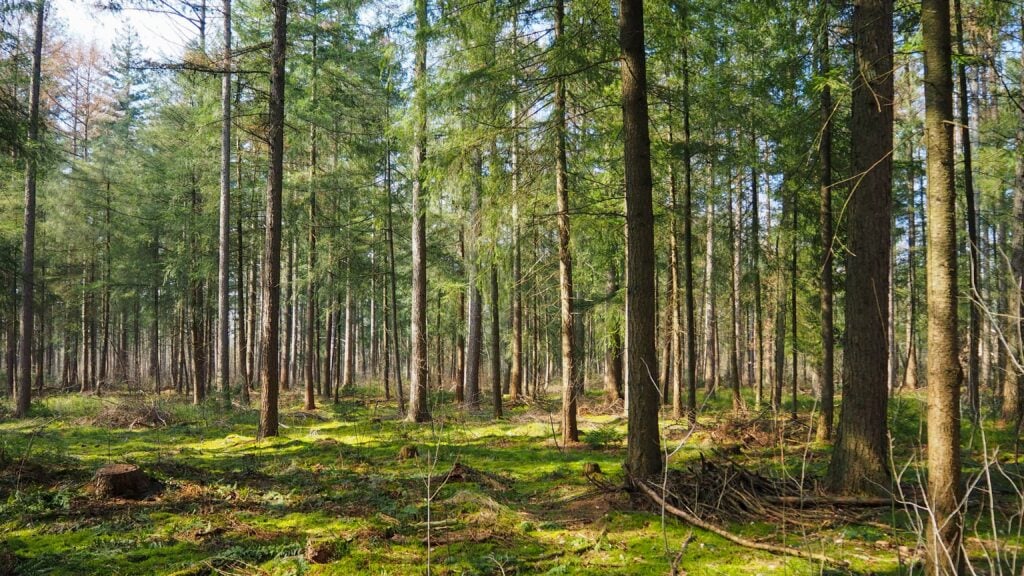
Hazardous Tree Inspection
A tree inspection should examine the surrounding targets as carefully as the tree itself because a weakened limb over an empty field presents a different level of risk than the same limb over a bedroom, sidewalk, or parking area. Qualified professionals consider the likelihood of failure, the size of the part that may fall, weather exposure, soil conditions, species characteristics, and what could be struck. OSHA recommends having a qualified arborist identify structural and falling-object hazards before tree-care work begins. Homeowners can support the inspection by sharing photographs, dates of observed changes, records of construction, and information about previous pruning or storm damage.
- Identify buildings, walkways, vehicles, and utilities within reach.
- Provide records of earlier pruning, excavation, or lightning damage.
- Ask whether monitoring, pruning, support, or removal is recommended.
Tree Removal Decisions
Visible damage does not automatically mean a tree must be removed, since some problems can be managed through targeted pruning, improved soil care, support systems, pest treatment, or scheduled monitoring. Tree removal may become the safer choice when severe decay, major root failure, extensive crown death, splitting trunks, or multiple defects leave few reasonable ways to reduce risk. Homeowners should also consider the tree’s location, species, remaining life expectancy, value to the property, and ability to recover after corrective work. Professional recommendations should explain the defect, possible outcome, urgency, treatment choices, and expected limitations rather than relying on fear or appearance alone.
- Request a clear explanation of the defect and likely failure pattern.
- Compare risk-reduction options before approving removal.
- Ask how quickly the recommended work should be completed.
Safer Tree Care Choices
Hazardous tree work can expose people to chainsaws, falling wood, unstable trunks, aerial equipment, traffic, and energized utility lines, so seemingly simple cutting jobs can become dangerous within seconds. OSHA reports that falls and struck-by incidents are leading causes of serious injury and death during professional tree-care operations. Homeowners should avoid climbing damaged trees, pulling suspended limbs with vehicles, cutting trunks under pressure, or standing beneath branches while someone else works. Precision Arborcare can help evaluate tree condition and explain which actions are appropriate for the property, but the proposed company quotations in this copy should be confirmed before publication.
- Do not climb a cracked, hollow, leaning, or storm-damaged tree.
- Never cut or pull branches located near electrical conductors.
- Use trained professionals for elevated or structurally complex work.
Key Takeaways for Hazardous Trees
The signs of hazardous trees often overlap, and the combination of defects usually matters more than one isolated symptom. Dead branches may accompany trunk decay, a new lean may follow root damage, and a weak union may split after heavy wind, which is why homeowners should inspect the crown, trunk, roots, soil, and nearby targets as one connected system. Prompt attention does not always lead to removal because pruning, support, treatment, restricted access, or continued monitoring may reduce risk when enough healthy structure remains. Careful documentation and a qualified inspection give homeowners a stronger basis for deciding what should happen next.
- Watch for new or rapidly changing defects.
- Treat multiple warning signs as a higher concern.
- Keep people and property outside possible fall zones.
Frequently Asked Questions
Can Hazardous Trees Recover?
Some hazardous trees can remain on the property when corrective pruning, soil improvements, support systems, pest management, or routine inspections reduce the risk to an acceptable level. Recovery depends on the species, age, defect, location, remaining healthy wood, and ability to compartmentalize damage. Severe root failure, extensive decay, or a splitting trunk may leave removal as the more responsible option.
Who Inspects Dangerous Trees?
A qualified arborist or experienced tree-risk professional can examine the tree’s structure, biological condition, surroundings, and potential targets. The inspection should include more than a quick estimate from the driveway, especially when the tree is large or close to occupied structures. Homeowners may also seek a second opinion when removal is recommended for a valuable mature tree.
When Should Trees Be Checked?
Trees should be inspected after major storms, lightning, flooding, nearby excavation, root cutting, sudden leaning, branch failure, or noticeable canopy decline. Regular checks are also sensible for mature trees positioned near homes, play areas, roads, parking spaces, and utility lines. A new crack, lifted root plate, hanging limb, or fungal growth near the base warrants earlier attention.
Are Dead Branches Dangerous?
Dead branches can fall during wind, rain, ice, or calm conditions as their attachment points weaken. Larger limbs can damage roofs, vehicles, fences, and outdoor equipment, while smaller pieces may still injure someone standing below. Deadwood located over occupied areas should be evaluated and removed using methods appropriate for the tree’s condition.
Does Insurance Cover Tree Damage?
Homeowners insurance coverage depends on the policy language, cause of the tree failure, damaged property, maintenance history, and any exclusions or deductibles. A policy may treat damage to an insured structure differently from the cost of removing a tree that falls without striking covered property. Homeowners should document the scene, prevent additional damage when it is safe to do so, and ask their insurer how the specific policy applies.

Home Garden Wire is your go-to resource for the latest in home and garden services. We provide reliable, actionable information on DIY home improvement, home maintenance, eco-friendly practices, and home design. Our well-researched content empowers homeowners with practical solutions and expert advice. Trust Home Garden Wire to help you enhance your living spaces with tips on home renovation, sustainable living, and innovative home services.